

A senior M&A lawyer wanted to teach deal-making to the next generation of lawyers, without handing a subscription or a cut of every sale to a course marketplace. We built her a complete course business on platforms she owns outright.
A WordPress and WooCommerce storefront sells the courses, a Moodle™ learning platform delivers them, and a custom integration joins the two so students only ever see one academy. The academy recovered its full setup and development cost within four months of launch.
- Storefront and LMS with a single login across both
- Course videos streamed securely, never downloadable or shareable
- No subscription and no commission. The only running cost is AWS
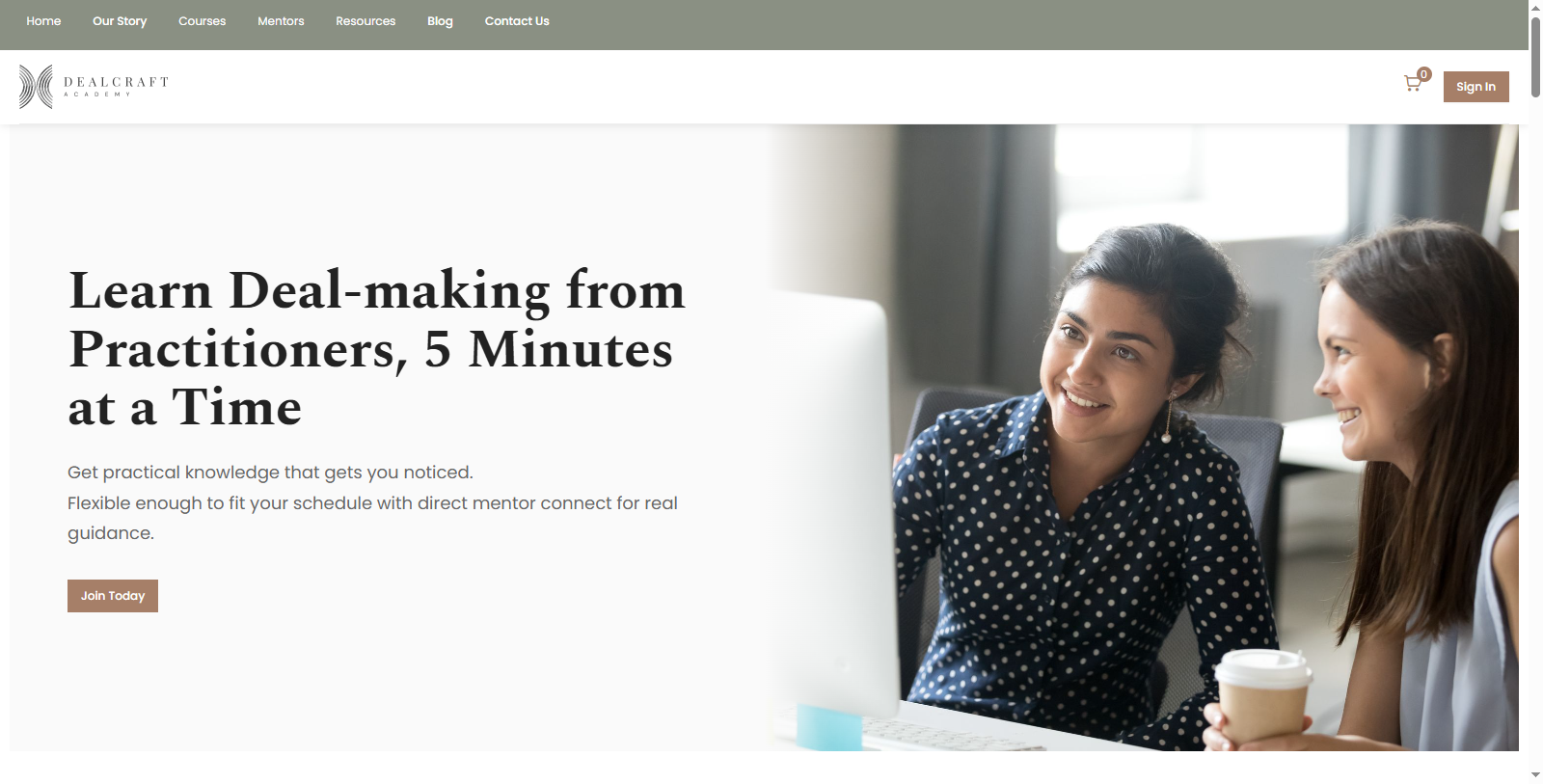
The DealCraft Academy storefront, built on WordPress and WooCommerce.
The client
DealCraft Academy was founded by a Mergers & Acquisitions lawyer with more than 20 years of practice and a partner at one of India’s leading law firms.
She saw a clear gap. Law students and young lawyers had plenty of theory available to them, but very little practical, experience-led training in how M&A transactions actually work. She wanted to turn two decades of deal experience into structured online courses.
The challenge
Her brief was specific: total control. No monthly subscription, no commission on every sale, no marketplace branding on her content, and no vendor deciding which features she could have.
After working through her requirements, it was clear a standalone LMS would not be enough. Open-source learning platforms are excellent at delivering courses, but they are not built to sell them. Their storefronts are basic and they are weak at the content marketing and SEO a new academy needs to find students.
Two platforms, each doing what it does best
We split selling from learning and gave each job to the best tool for it, then joined them so students only ever see one academy.
Storefront
WordPress + WooCommerce. WordPress for content publishing and SEO, which matters for an academy that grows through search. WooCommerce for mature commerce, broad payment gateway support and a large extension ecosystem.
Learning platform
Moodle™. A proven open-source LMS handling courses, assessments, completion logic and certification, extended with our own theme and plugins.
Infrastructure
AWS. Both platforms on EC2 behind an Application Load Balancer, with RDS for managed databases, hardened and backed up with a documented recovery plan.
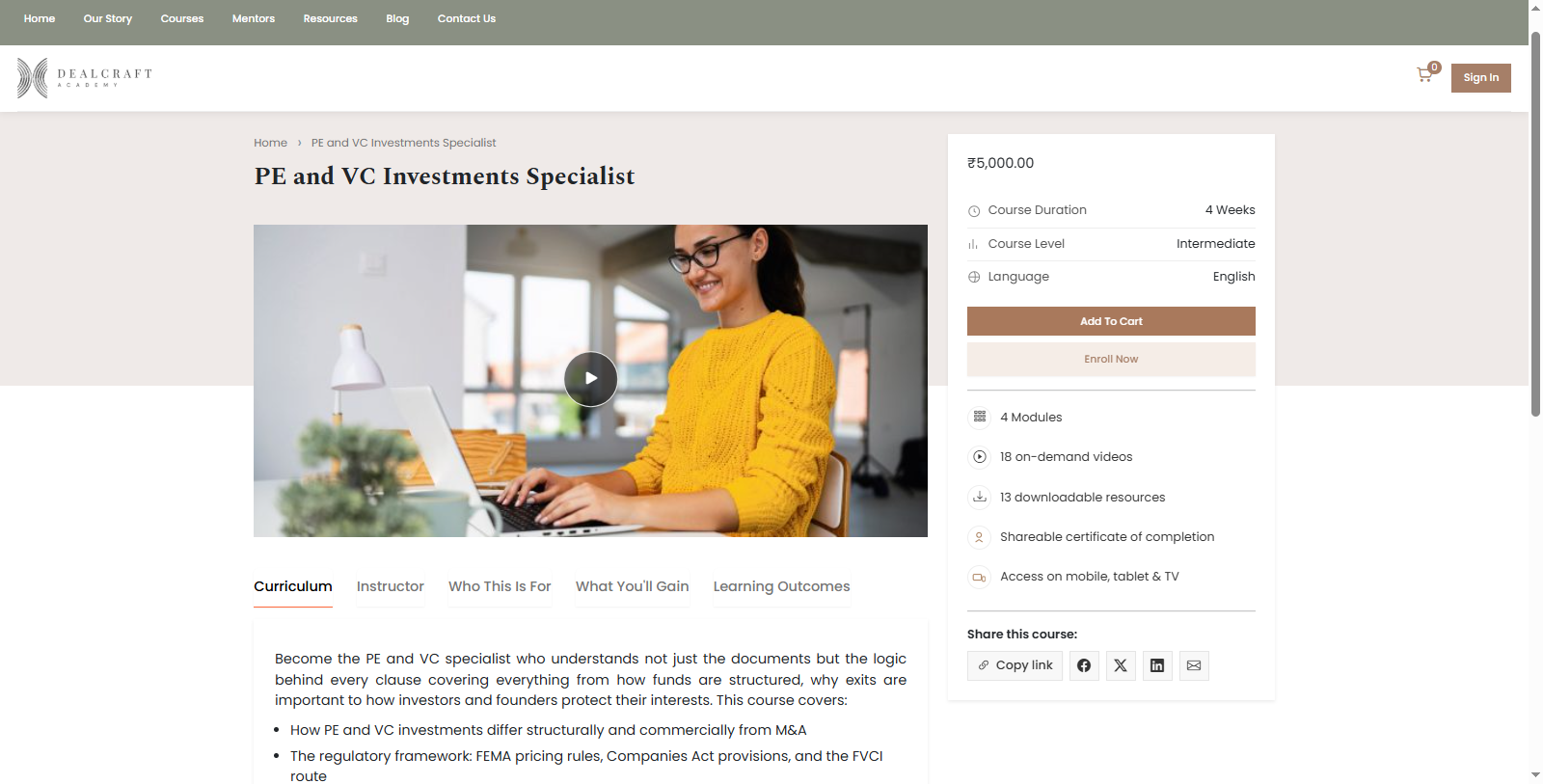
A course details page on the storefront, where students browse and buy.
What we built
Course videos are the academy’s core asset and the join between two platforms is where most setups feel clumsy. Those two problems got the most engineering.
A custom integration that became a product
The available WordPress to Moodle™ plugins were clunky and students would have felt the join at every step. We built our own, handling single sign-on, enrolment on purchase and account sync.
Students buy a course and land straight in their learning, with no second login and no sense of moving between systems. It worked well enough that we turned it into a product: CourseTransit.
Secure video delivery
- Every video converted to HLS adaptive streaming with AWS MediaConvert, with subtitles
- Served through CloudFront with Origin Access Control, so storage is never publicly exposed
- Playback locked with CloudFront signed cookies, so videos stream only for logged-in students inside the LMS and cannot be shared by copying a link
Interactive video lessons
A custom Moodle™ plugin built on Plyr.js and HLS.js, with knowledge checks at the end of each video.
Branded on both sides
Custom Moodle™ and WordPress themes built to the brand guidelines, so both feel like one product.
Learning logic
Complex quizzes, completion rules, workflows and certificates configured across every course.
Security and recovery
Both platforms hardened, with automated backups and a recovery plan in place before launch.
Inside the learning platform
Students move through structured course sections, protected video lessons and assessments, and finish with a certificate issued automatically on completion. The experience carries the academy’s own brand from storefront to certificate.
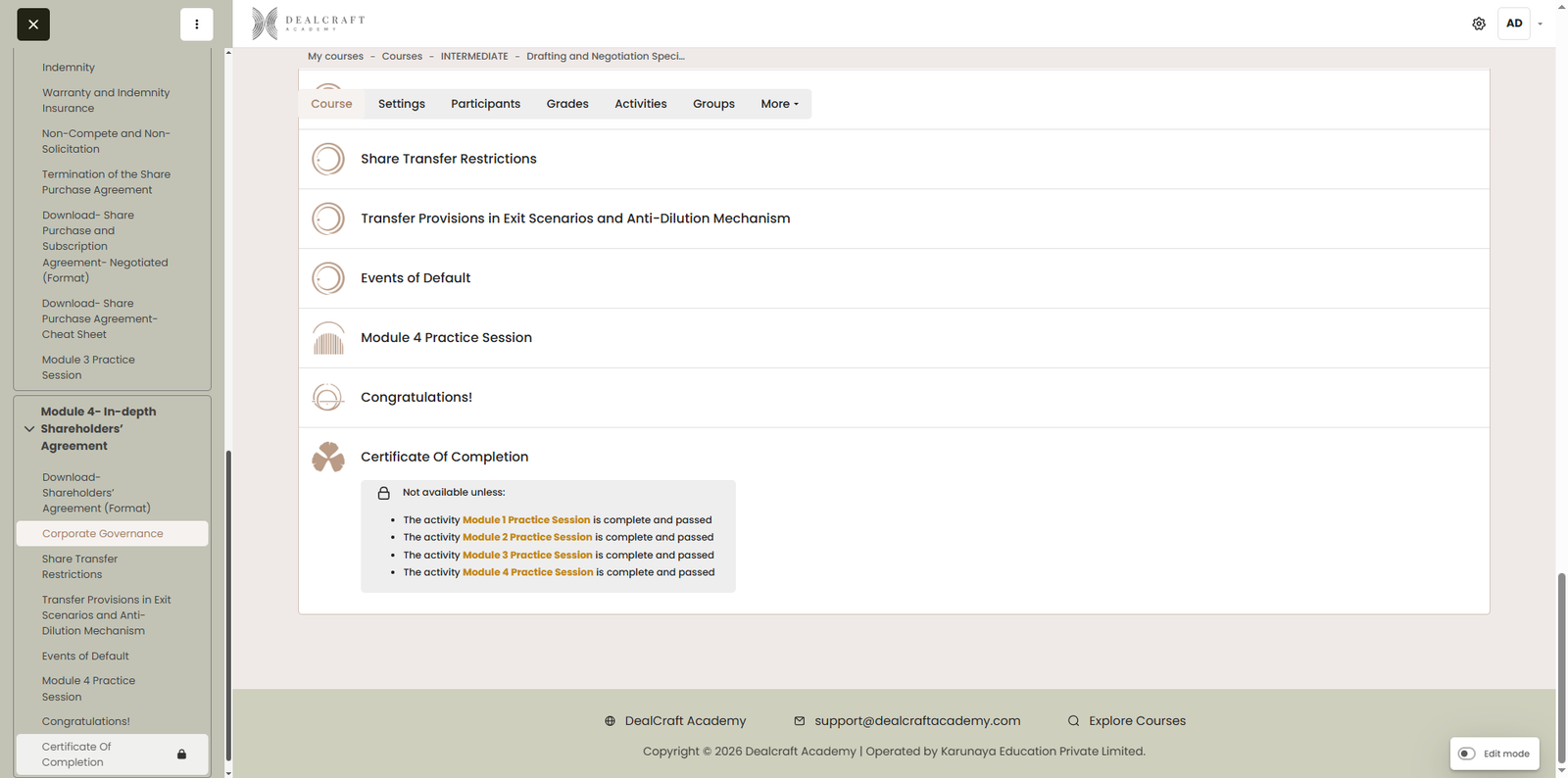
A course in the LMS, with the completion certificate activity.
The outcome
A course business the founder owns end to end, that paid for itself in its first four months.
Paid back in four months
The full cost of setup and development was recovered within four months of launch.
Every sale kept
No subscription and no commission. Course revenue stays with the academy.
No lock-in
No vendor branding and no feature limits. The academy decides what gets built next.
One seamless academy
Secure, robust platforms that students experience as a single product.
They were very responsive to all requests. The project management tool implemented by them made it easy to communicate and fix any issues. They were very proactive in understanding the needs and figuring out a way to address them. They were very knowledgeable about Moodle set-up and were happy to custom build certain plug-ins to enhance user experience.
Amruta Kelkar, Founder, DealCraft Academy · Source: Clutch
Technology used
Open-source platforms on standard AWS services, so the academy is never tied to a single vendor.
| Learning platform | Moodle™, custom theme, custom video plugin |
|---|---|
| Storefront | WordPress, WooCommerce, custom theme |
| Integration | CourseTransit (single sign-on, enrolment and account sync) |
| Video | AWS MediaConvert (HLS), CloudFront with Origin Access Control and signed cookies, Plyr.js, HLS.js |
| Infrastructure | AWS EC2, Application Load Balancer, RDS |
Selling courses on someone else’s platform?
Tell us what you teach, how you sell it today and what the platform costs you. We will tell you what an owned academy would take to build, and how long it would take to pay for itself.